
How Intelligent Systems Are Transforming Modern Cloud Operations
Cloud Management has become more complex as organizations scale digital services, adopt hybrid models, and manage distributed workloads. Traditional tools struggle to keep pace with dynamic environments. As a result, artificial intelligence is now playing a central role in redefining how cloud infrastructure is monitored, optimized, and secured.
AI-driven platforms introduce automation, predictive insights, and adaptive controls that simplify operations while improving reliability. From startups to enterprises, businesses now rely on intelligent cloud solutions to remain competitive, resilient, and cost-efficient.
Why AI Is Critical for Advanced Cloud Management
Modern cloud ecosystems generate vast volumes of telemetry data. Manual analysis is neither scalable nor accurate enough. AI addresses this gap by processing real-time metrics, detecting anomalies, and recommending actions before issues escalate.
By combining machine learning with cloud management practices, organizations gain visibility, agility, and proactive control. This shift is no longer optional; it is essential for sustainable growth.
7 Powerful Ways AI Enhances Cloud Management
1. Predictive Resource Optimization
AI analyzes historical usage patterns and real-time demand to predict future resource requirements. This enables automated scaling of compute, storage, and networking resources, ensuring optimal performance without overprovisioning.
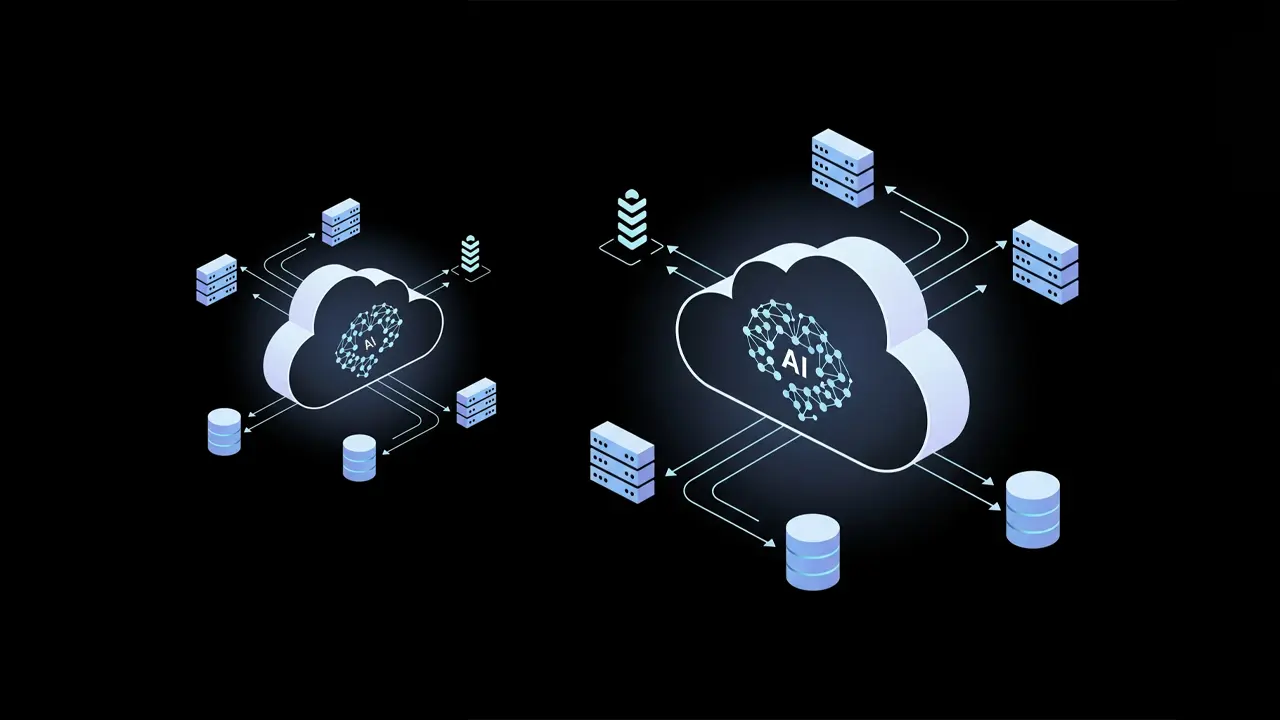
Predictive optimization reduces waste, improves application responsiveness, and aligns infrastructure capacity with business needs. This capability is especially valuable in multi-cloud and hybrid environments.
2. Intelligent Cost Management
Managing cloud spend is a persistent challenge. AI-powered cloud management tools continuously analyze billing data, usage trends, and pricing models to identify cost-saving opportunities.
These systems recommend reserved instances, rightsizing strategies, and workload scheduling adjustments. Over time, organizations achieve significant cost reductions without sacrificing performance.
3. Proactive Performance Monitoring
Traditional monitoring tools rely on static thresholds. AI replaces this approach with adaptive baselines that evolve with workload behavior. This allows early detection of performance degradation.
By correlating metrics across services, AI identifies root causes faster. As a result, teams resolve incidents quickly and maintain consistent service availability.
4. Enhanced Cloud Security and Threat Detection
Security is a core pillar of effective cloud management. AI strengthens defenses by continuously scanning configurations, access patterns, and network traffic for anomalies.
Machine learning models detect suspicious behavior that rule-based systems often miss. This improves threat detection, reduces false positives, and accelerates response times.
For deeper insights into enterprise-grade cloud security practices, you can explore guidance from
AWS cloud security resources.
5. Automated Incident Response
When issues occur, response speed is critical. AI-driven automation enables cloud platforms to execute predefined remediation actions without human intervention.
This includes restarting services, reallocating resources, or isolating compromised components. Automated response minimizes downtime and reduces operational risk.
6. Smarter Workload Placement
AI evaluates latency requirements, compliance constraints, and cost factors to determine optimal workload placement across regions and providers.
This intelligent orchestration ensures applications run where they perform best, improving user experience while meeting regulatory obligations.
7. Continuous Learning and Optimization
Unlike static systems, AI continuously learns from new data. Each interaction improves future recommendations, making cloud management increasingly efficient over time.
This continuous optimization supports long-term scalability and enables organizations to adapt quickly to changing business demands.
The Business Impact of AI-Driven Cloud Management
Adopting AI in cloud management delivers measurable business value. Teams spend less time on routine tasks and more time on innovation. Operational costs decrease, while reliability and security improve.
Moreover, AI empowers decision-makers with actionable insights. This data-driven approach supports strategic planning and accelerates digital transformation initiatives.
Preparing for the Future of Cloud Operations
As cloud environments grow more distributed, AI will become the backbone of effective cloud management. Organizations that invest early gain a competitive advantage through agility and resilience.
If you are exploring broader strategies to secure and optimize your cloud ecosystem, you may also find value in our detailed guide on modern cloud security best practices.
In conclusion, AI is no longer an enhancement but a necessity. By embracing intelligent cloud management, businesses unlock performance, efficiency, and control at scale.