AI Agents That Actually Close More Deals in 2026: The Complete Enterprise Guide
The sales landscape in 2026 has fundamentally changed. AI Agents That Actually Close More Deals in 2026 are no longer experimental technology they are production grade, revenue generating systems deployed by enterprise sales teams, SaaS startups, and digital transformation agencies worldwide. These intelligent agents prospect leads, qualify opportunities, personalize outreach, update CRM records, and nurture prospects through the pipeline with minimal human supervision. For businesses still relying on manual sales workflows, the competitive gap is widening every quarter.
This guide breaks down exactly how modern AI sales agents work, why forward-thinking organizations are deploying them now, and the best practices that separate high-performing implementations from costly failures.
What Are AI Agents That Actually Close More Deals in 2026?
An AI sales agent is an autonomous software system that uses machine learning, natural language processing (NLP), and predictive analytics to perform end-to-end sales tasks without constant human instruction. Unlike traditional CRM automation which follows rigid if-this then that rules AI agents reason about context, learn from outcomes, and adapt their behavior over time.
In practical terms, a modern AI sales agent can:
- Identify and score inbound leads based on behavioral, firmographic, and intent signals
- Send personalized outreach emails and follow-up sequences at optimal send times
- Answer prospect questions via chat or email using generative AI
- Log every interaction automatically inside the CRM
- Flag stalled deals and recommend next-best actions to human reps
- Generate sales forecasts and pipeline health reports in real time
- Book discovery calls and demos directly into calendars
The critical distinction is autonomy with purpose. These agents don’t just automate tasks they make decisions within defined parameters and continuously improve based on results. As Salesforce Agentforce demonstrates, enterprise-grade AI agents can now handle complex, multi-step sales workflows across the entire customer lifecycle.
Why Businesses Need AI Agents That Actually Close More Deals in 2026
Sales teams face compounding pressures in 2026. Buyers conduct more independent research before engaging a rep. Attention windows are shorter. Personalization expectations are higher. And the volume of leads across inbound, outbound, and digital channels has grown beyond what human teams can manage efficiently.
Consider three core problems AI sales agents directly solve:
1. Speed-to-Lead Is Now a Deal-Breaker
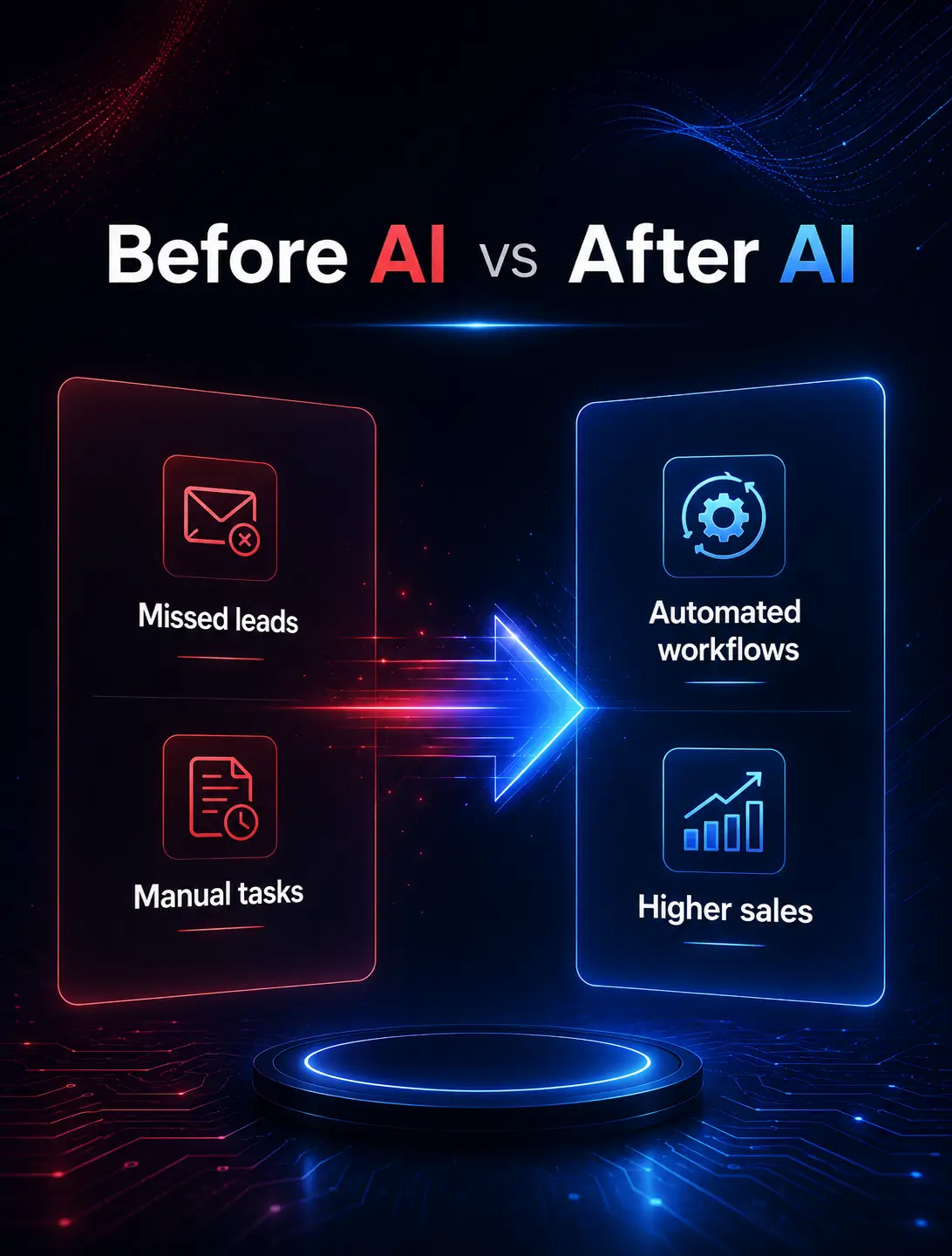
Research consistently shows that responding to a lead within five minutes dramatically increases conversion rates. Most human sales teams cannot achieve this at scale across multiple time zones and channels. An AI agent responds instantly qualifying, engaging, and routing leads 24 hours a day, seven days a week.
2. CRM Data Decay Kills Forecasts
Manual CRM updates are inconsistent. Sales reps skip fields, forget to log calls, and rarely update deal stages in real time. AI agents automatically capture every interaction and maintain data integrity, which directly improves forecast accuracy and management visibility. For teams using Zoho CRM integrations and automation, AI agents amplify the value of every workflow already in place.
3. Rep Time Is Wasted on Non-Selling Activities
Studies from leading CRM analytics firms show that sales representatives spend a significant portion of their workweek on administrative tasks data entry, scheduling, and internal reporting rather than selling. AI agents absorb that non-revenue work and return selling time to human reps where emotional intelligence and relationship depth create real differentiation.
Key Benefits of AI Sales Automation Tools 2026
Deploying AI sales automation tools in 2026 delivers measurable advantages across the full revenue operation. Here are the primary benefits enterprises are reporting:
Predictive Lead Scoring at Scale
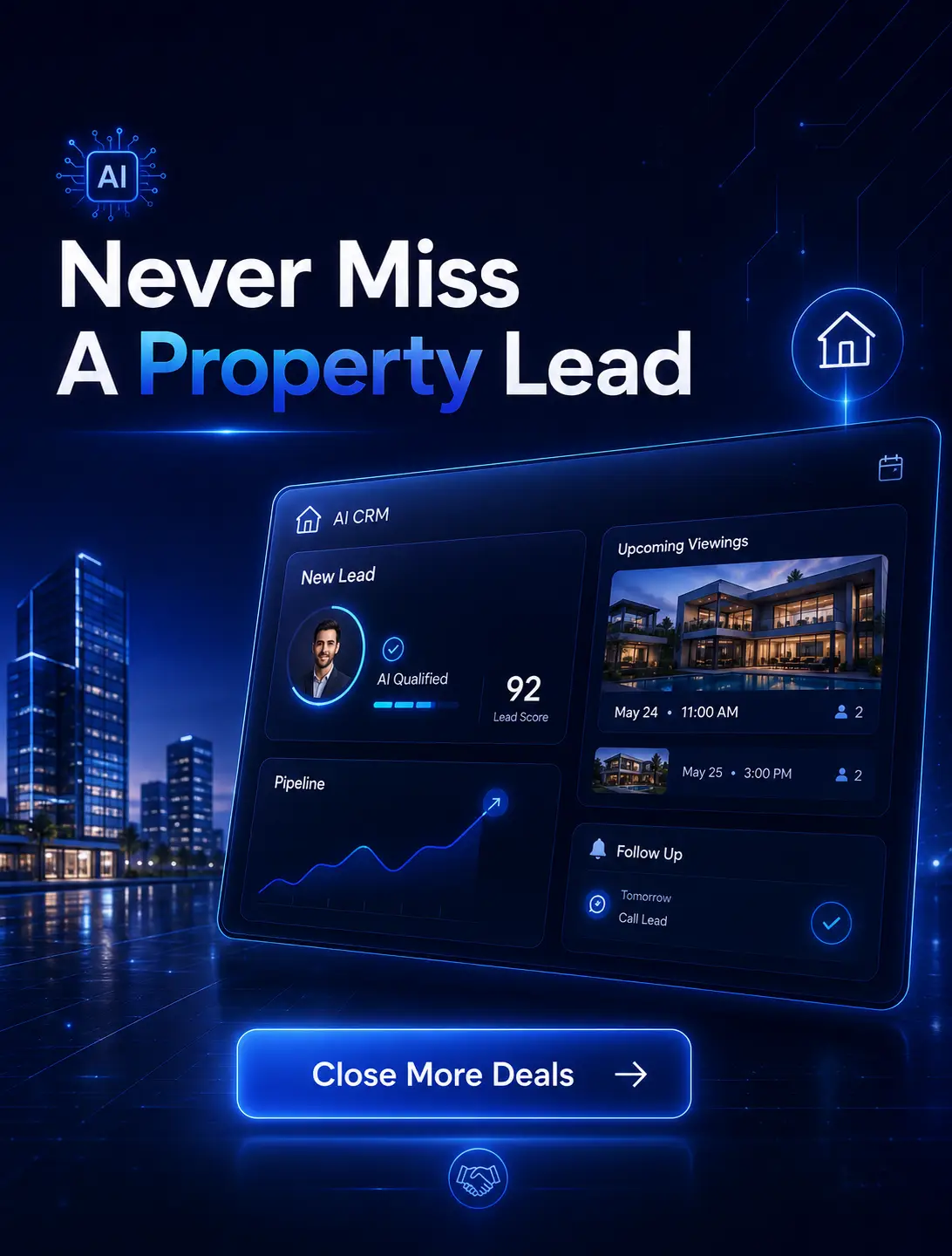
AI agents analyze hundreds of data signals website behavior, email engagement, LinkedIn activity, firmographic data, and historical conversion patterns to assign real-time lead scores. This eliminates guesswork and ensures reps spend time on the highest-probability opportunities. Platforms like HubSpot AI embed this scoring natively within the CRM pipeline.
Hyper-Personalized Outreach at Volume
Generative AI within sales agents drafts personalized emails, follow-up messages, and proposals based on each prospect’s industry, role, behavior history, and stage in the buying journey. Personalization that once required hours of manual research now takes seconds.
Autonomous Multi Channel Follow Up
AI agents orchestrate follow-up sequences across email, SMS, LinkedIn, and chat adjusting timing and channel based on prior engagement patterns. They stop sequences automatically when a prospect responds, preventing the awkward over-messaging that damages relationships.
Real-Time Pipeline Intelligence
Rather than static weekly reports, AI agents surface live pipeline health metrics, deal risk indicators, and revenue forecasts. This enables sales managers to intervene proactively on at-risk deals before they close lost.
Seamless CRM Synchronization
Every call, email, meeting, and interaction is logged automatically. CRM records stay current without rep input. For organizations running customer service automation alongside sales, synchronized CRM data creates a single source of truth across the entire customer journey.
Autonomous AI Agents for Sales Teams: Real-World Use Cases
Understanding how AI agents perform in production environments clarifies their practical value. The following use cases represent deployments across enterprise and mid-market sales organizations.
Use Case 1: Inbound Lead Qualification for SaaS Companies
A B2B SaaS platform receives hundreds of demo requests weekly. An AI agent reviews each submission, enriches the contact with firmographic data via API, scores the lead against ideal customer profile (ICP) criteria, and routes high-fit leads to enterprise reps while routing lower-fit leads into a self-serve onboarding sequence. The result is faster response for high-value prospects and zero leads falling through the cracks.
Use Case 2: Outbound Prospecting for Enterprise Sales
An AI agent monitors intent data platforms and buying signals such as job postings, technology adoption signals, and competitor displeasure indicators on social platforms to identify companies showing purchase readiness. It builds targeted prospect lists, drafts personalized cold outreach, and sequences multi-touch campaigns. Human reps engage only after initial positive signals are confirmed.
Use Case 3: Deal Resurrection in Stalled Pipelines
Deals that go quiet are a major source of revenue leakage. AI agents identify opportunities that have had no activity beyond a defined threshold and automatically trigger re-engagement sequences offering new content, case studies, or trial extensions relevant to the prospect’s documented objections.
Use Case 4: Post-Sale Expansion and Upsell Identification
AI agents monitor customer usage data, support ticket patterns, and contract renewal timelines to surface expansion opportunities. When usage spikes or when a customer approaches a plan limit, the agent automatically notifies the account manager and can initiate a check-in sequence without human intervention.
CRM AI Agents Lead Conversion: How the Technology Works
At a technical level, CRM AI agents lead conversion through a combination of four core capabilities:
- Machine Learning (ML): The agent trains on historical sales data won deals, lost deals, contact behaviors to identify the patterns most predictive of conversion. It continuously updates its models as new data flows in.
- Natural Language Processing (NLP): The agent reads and generates human language across email, chat, and voice transcripts. It understands intent, sentiment, and context not just keywords.
- Reasoning and Decision Trees: Advanced agents use reasoning engines (such as Salesforce Agentforce’s Atlas engine) to evaluate multiple possible actions and select the optimal next step based on defined business goals and real-time context.
- API and CRM Integration: Agents connect natively to CRM platforms, marketing automation tools, communication systems, and data enrichment services. This integration fabric enables them to act across the entire sales technology stack without switching interfaces.
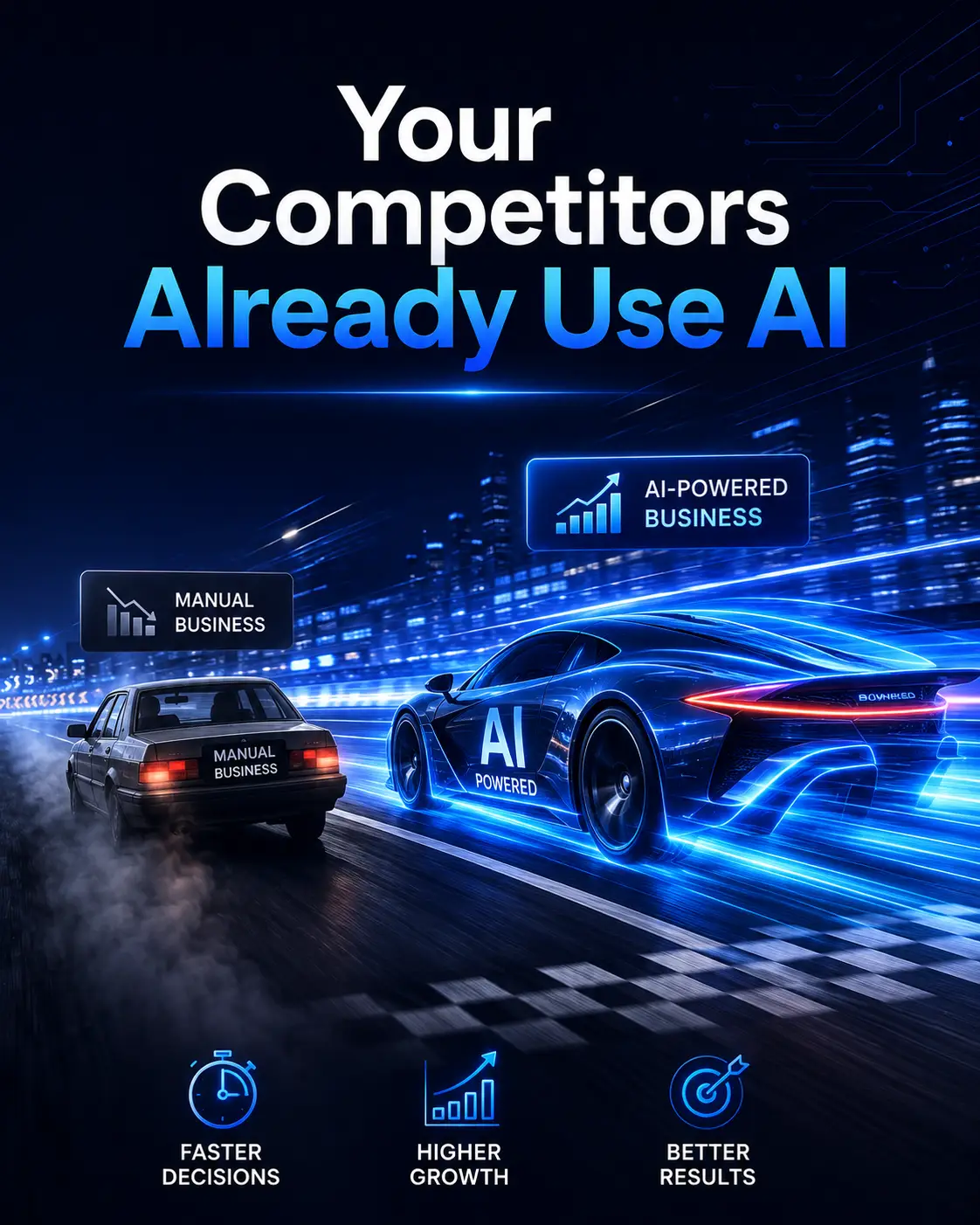
This architecture is why modern AI agents outperform rigid automation tools. They adapt. When a prospect responds unexpectedly, the agent adjusts. When a campaign is underperforming, the agent escalates or shifts strategy rather than blindly continuing a failing sequence. OpenAI‘s advancements in reasoning models have significantly accelerated what enterprise sales agents can accomplish in 2026.
AI Powered Sales Pipeline Management: Challenges and Solutions
Deploying AI agents effectively requires navigating real implementation challenges. Organizations that acknowledge these early build more resilient systems.
Challenge 1: Data Quality and CRM Hygiene
Problem: AI agents are only as intelligent as the data they train on. Dirty CRM data duplicate records, missing fields, outdated contacts produces inaccurate scoring and poor personalization.
Solution: Conduct a CRM audit before deployment. Establish data governance policies that define required fields, deduplication protocols, and enrichment workflows. AI agents can then maintain hygiene going forward, but the initial baseline must be clean.
Challenge 2: Sales Team Resistance and Adoption
Problem: Sales reps often perceive AI agents as threats to job security or as tools that diminish their autonomy. Low adoption undermines the ROI of any deployment.
Solution: Frame AI agents as tools that eliminate administrative burdens and increase commission-earning selling time. Involve top performers in the pilot phase. Show tangible time savings within the first 30 days.
Challenge 3: Over-Automation and Loss of Human Touch
Problem: Fully automated outreach sequences can feel impersonal, damaging brand reputation and prospect relationships especially in high-ACV enterprise deals.
Solution: Deploy AI agents for early-stage qualification and nurturing. Reserve human-led conversations for discovery calls, proposal presentations, and negotiation. The handoff from agent to rep should be smooth, contextual, and clearly communicated. For teams building this hybrid approach, AI-driven support models offer a useful framework for defining where automation ends and human judgment begins.
Challenge 4: Integration Complexity Across Tech Stacks
Problem: Enterprise sales environments involve multiple tools CRM, marketing automation, conversation intelligence, ERP, and communication platforms. Connecting AI agents across this stack is technically demanding.
Solution: Prioritize AI agents with native integrations for your core CRM platform. For organizations using Zoho CRM or Salesforce, platform-native AI agents significantly reduce integration overhead and data latency.
Future Trends: AI Agents That Actually Close More Deals in 2026 and Beyond
The evolution of AI sales agents is accelerating rapidly. Several trends are shaping the next 18 to 36 months of development:
Multi-Agent Orchestration
Rather than a single AI agent managing all sales tasks, enterprise deployments are moving toward networks of specialized agents one for lead qualification, one for outreach personalization, one for pipeline forecasting that communicate and coordinate in real time. This architecture delivers superior performance at scale.
Voice AI Integration in Sales Workflows
AI agents are moving beyond text. Voice-enabled agents can conduct preliminary qualification calls, transcribe conversations, analyze sentiment, and update CRM records automatically. Early deployments show significant reductions in time-to-qualification for inbound leads.
Buyer Intent Signal Intelligence
Next-generation agents consume intent data from an expanding range of sources third-party intent platforms, social listening, news monitoring, and SEC filings to identify the precise moment a target account enters a buying cycle. This shifts outbound sales from volume-based spray-and-pray to precision timing.
Vertical-Specific AI Sales Agents
General-purpose agents are giving way to industry specific deployments trained on domain terminology, compliance requirements, and buyer behavior unique to sectors like financial services, healthcare technology, and enterprise software. Vertical specificity dramatically improves relevance and conversion rates. IBM Watson and similar enterprise AI platforms are accelerating this vertical specialization trend.
Best Practices for Deploying AI Sales Automation Tools 2026
Organizations that achieve the strongest ROI from AI sales agents follow a consistent set of implementation principles:
- Start with a defined use case. Do not attempt to automate everything at once. Begin with inbound lead qualification or outbound prospecting, measure results, then expand.
- Align AI agent goals with revenue metrics. Configure agents around pipeline velocity, meeting booked rate, or qualified lead volume not just activity metrics like emails sent.
- Establish human review checkpoints. For high-value deals, build workflow steps that require human approval before major commitments are made or sent on behalf of the company.
- Monitor model drift regularly. AI agent performance degrades when market conditions change or when the underlying data distribution shifts. Schedule quarterly model performance reviews.
- Maintain compliance and data privacy standards. AI agents processing personal contact data must operate within GDPR, CCPA, and regional data protection frameworks. Configure consent management accordingly.
- Invest in sales team enablement. The best AI agent deployments pair technology with training. Reps who understand what the agent is doing and why use the human AI handoff more effectively.
- Use A/B testing for agent generated messaging. Continuously test subject lines, message framing, and outreach timing. AI agents generate the variations; the results feed back into model improvement.
AI Agents vs. Traditional Sales Automation: Key Differences
| Feature | Traditional Sales Automation | AI Sales Agents (2026) |
|---|---|---|
| Decision-making | Rule-based (if/then logic) | Context-aware reasoning |
| Personalization | Template-based with merge fields | Generative, prospect-specific content |
| Learning capability | Static requires manual updates | Continuous learning from outcomes |
| CRM data entry | Triggered on defined events only | Autonomous, real-time synchronization |
| Pipeline forecasting | Relies on rep-entered stage data | Predictive models based on behavioral signals |
| Scalability | Limited by workflow complexity | Scales autonomously across channels and volumes |
| Failure handling | Breaks on unexpected conditions | Adapts and escalates intelligently |
Frequently Asked Questions About AI Agents That Actually Close More Deals in 2026
What exactly does an AI sales agent do to close more deals?
An AI sales agent automates the full pre-sale workflow identifying and scoring leads, sending personalized outreach, following up across multiple channels, updating CRM records, and surfacing deal risks. By handling these tasks autonomously, agents accelerate pipeline velocity and ensure no lead or opportunity is neglected, resulting in higher close rates for human sales representatives.
Which CRM platforms support AI sales agents natively in 2026?
Salesforce (via Agentforce and Einstein), HubSpot (HubSpot AI), and Zoho CRM (via Zia AI) are the leading CRM platforms with native AI agent capabilities in 2026. Each offers autonomous lead scoring, workflow automation, and generative AI outreach tools integrated directly into the CRM interface.
Will AI agents replace human sales representatives?
No. AI sales agents replace repetitive, administrative sales tasks not human judgment, relationship management, or complex negotiation. In 2026, the most effective sales organizations deploy agents to handle early-stage qualification and nurturing while human reps focus on high-value conversations, discovery, and closing where emotional intelligence and strategic thinking are irreplaceable.
How long does it take to deploy an AI sales agent?
A focused deployment for a single use case such as inbound lead qualification can be live within two to four weeks for teams using a CRM with native AI capabilities. Broader multi-channel, multi-agent deployments across complex enterprise stacks typically require eight to sixteen weeks, including CRM data preparation, workflow configuration, and rep enablement.
What is the ROI of AI sales automation tools in 2026?
ROI varies by deployment scope and sales model, but organizations consistently report improvements in three areas: increased pipeline volume from faster lead response and broader prospecting coverage; improved conversion rates from better lead prioritization and personalized follow-up; and lower cost-per-acquisition from reduced time spent on manual tasks. For enterprise deployments, positive ROI is commonly reported within three to six months.
Conclusion: Building a Revenue Engine with AI Agents That Actually Close More Deals in 2026
The question for sales organizations in 2026 is no longer whether to deploy AI sales agents it is how quickly and how well. AI Agents That Actually Close More Deals in 2026 are reshaping revenue operations by combining the scale of automation with the adaptability of machine intelligence. They prospect more accounts, qualify faster, personalize at volume, and maintain pipeline data accuracy that human teams alone cannot match.
The organizations winning with this technology share common traits: they start with clear use cases, build on clean CRM data, design thoughtful human-AI handoffs, and continuously measure and optimize agent performance. Those that treat AI agents as a replacement for sales strategy will underperform. Those that treat them as a force multiplier for skilled sales teams will dominate their markets.
Now is the time to evaluate your current pipeline workflow, identify the highest-friction stages, and explore how autonomous AI agents can eliminate those bottlenecks. For businesses looking to architect the right AI-powered sales infrastructure, building on robust automation foundations is the most direct path to measurable revenue growth.
The deals are there. The technology is mature. The competitive advantage belongs to those who move first.